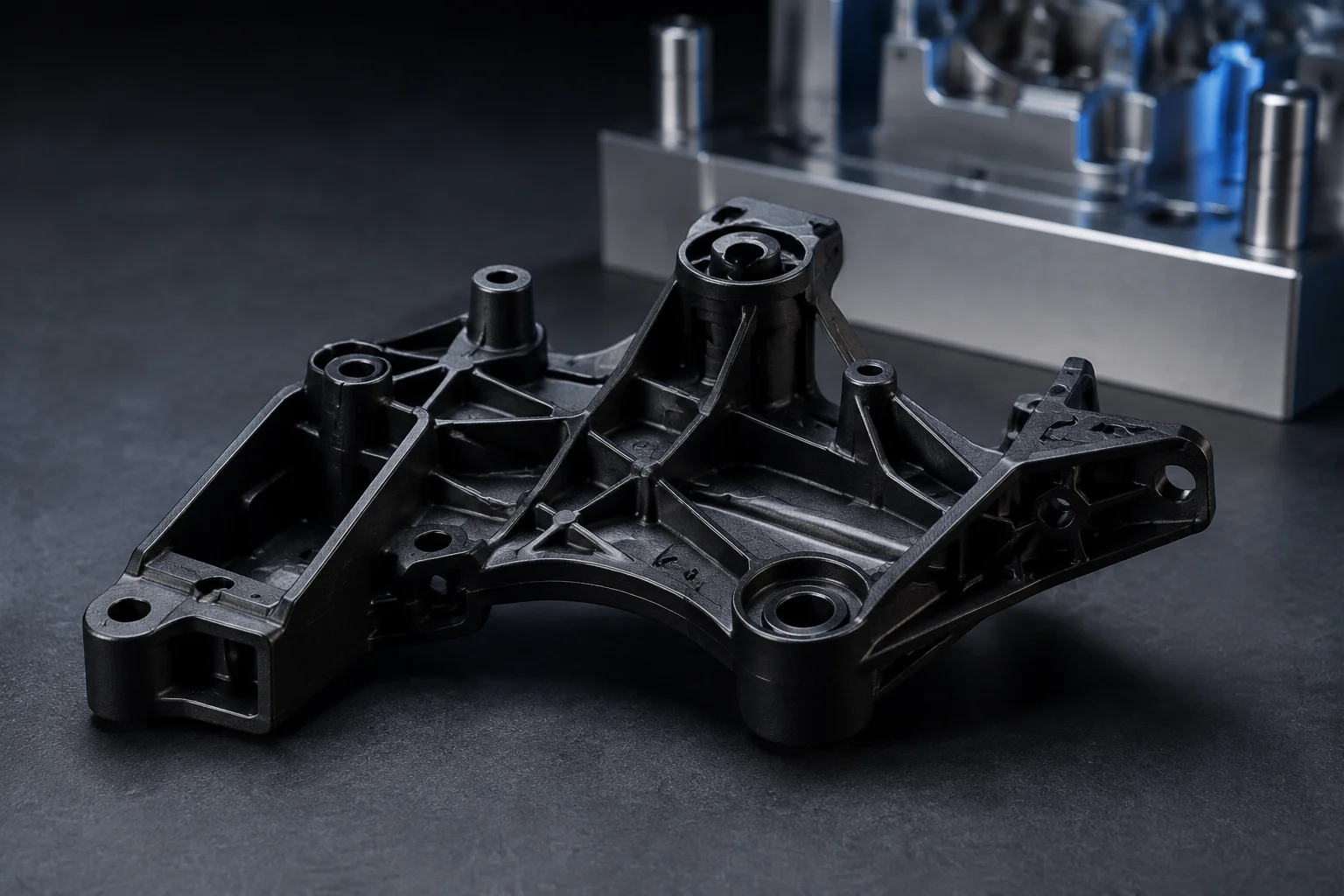
Complex plastic parts require more than a mold and an injection molding machine. Tight tolerances, intricate geometries, functional features, material requirements, cosmetic standards, and production volumes can all affect the final result. Choosing the right custom injection molding services therefore requires a closer look at engineering capabilities, tooling expertise, material selection, quality control, and production flexibility.
For companies developing functional housings, automotive components, medical parts, electronic enclosures, or other precision plastic products, the right manufacturing partner can help identify production risks before they become expensive tooling changes.
Start With a Strong Design for Manufacturing Review
A detailed Design for Manufacturing, or DFM, review should be one of the first steps in any custom injection molding project. Complex geometry can create problems with filling, cooling, ejection, warpage, sink marks, or tooling access if it is not evaluated before mold production.
An experienced injection molding provider should examine wall thickness, draft angles, ribs, bosses, undercuts, parting lines, gate locations, ejector positions, and critical tolerances. These details influence both mold construction and production stability.
HordRT provides preliminary DFM analysis before tooling and reviews important design factors to identify potential manufacturing risks. Its engineering process covers mold direction, gates, ejectors, draft, tolerances, wall thickness, and potential warpage.
This early engineering input allows designers to make practical adjustments before the mold becomes difficult or costly to modify.
Match Material Selection to the Application
Material selection should be based on how the finished component will actually perform. Mechanical strength, temperature resistance, chemical exposure, flexibility, dimensional stability, appearance, and regulatory requirements may all influence resin selection.
Common materials such as ABS, PP, PE, and PS can support general applications, while engineering plastics such as PC, PA, POM, PBT, and PPA are available for more demanding requirements. Elastomers such as TPE and TPU can also be used when flexibility, sealing, or soft-touch performance is required.
HordRT evaluates material choices according to functional, environmental, cosmetic, and cost requirements. Its injection molding capabilities cover general-purpose plastics, engineering materials, elastomers, reinforced resins, flame-retardant materials, and medical-grade options.
Selecting the resin together with the mold design is important because different materials can behave differently during filling, cooling, and shrinkage.
Evaluate Tooling Expertise Before Production
The quality of the mold directly influences the consistency of molded parts. For complex components, tooling decisions can affect cycle time, part appearance, dimensional stability, maintenance, and future production changes.
A capable provider should be able to recommend an appropriate tooling strategy based on expected production volume and product requirements. Prototype tooling, rapid tooling, bridge tooling, and production tooling can serve different project stages.
HordRT combines mold manufacturing with injection molding, allowing tooling and production requirements to be considered within the same manufacturing workflow. The company reports annual capacity of more than 1,800 mold sets and offers rapid tooling with typical lead times of 10 to 15 days for suitable projects.
This integrated approach can reduce communication gaps between mold development and part production.
Consider Production Flexibility
Production requirements can change significantly between prototype validation, pilot runs, product launches, and repeat manufacturing. A supplier that only focuses on large production quantities may not be suitable when demand is still being evaluated.
Custom injection molding services should provide a production strategy that matches the actual project stage. Low-volume molding can be useful for functional validation, market testing, bridge production, and early-stage launches before larger quantities are required.
HordRT supports prototype, low-volume, bridge, and repeat production without a fixed minimum order quantity. Its low-volume injection molding service is designed for quantities ranging from hundreds to several thousand parts, depending on geometry, material, tooling approach, and expected demand.
Look Beyond Molding to Surface Finishing
For many plastic products, molding is only part of the manufacturing process. Appearance, branding, identification, and surface performance may require additional finishing operations.
Depending on the application, options can include molded textures, gloss control, painting, silk screening, pad printing, laser engraving, and other decorative processes. These requirements should be discussed before tooling because resin selection, part geometry, texture location, and cosmetic standards can affect the final finish.
HordRT provides secondary processing and finishing services as part of its broader manufacturing capabilities, helping customers coordinate molded parts and subsequent production operations through one manufacturing partner.
Check Quality Control and Production Traceability
For complex molded parts, quality should not depend only on final inspection. Effective quality control begins with drawing and tolerance review and continues through tooling, molding, dimensional inspection, and final verification.
Important considerations include critical dimensions, surface requirements, material specifications, inspection documentation, and part traceability. For applications with stricter cleanliness requirements, the manufacturing environment itself may also matter.
HordRT operates a 720-square-meter ISO 8 cleanroom for injection molding and supports ISO 13485 quality management for medical manufacturing projects. Its quality approach includes documented processes, inspection procedures, and production traceability.
Choose a Manufacturing Partner That Supports the Full Process
The most practical custom injection molding services should connect engineering, tooling, molding, inspection, and finishing rather than treating each stage as an isolated task. This becomes particularly important when a component has complex geometry, tight dimensional requirements, multiple materials, or demanding cosmetic standards.
HordRT provides an integrated path from CAD review and DFM analysis to tooling, injection molding, quality inspection, and delivery. Its capabilities include insert molding, overmolding, gas-assisted injection molding, silicone compression molding, low-volume molding, and conventional plastic injection molding.
Make the Selection Based on the Entire Manufacturing Process
Choosing a supplier for complex plastic parts should involve more than comparing a molding price. The more important questions are whether the provider can understand the design, recommend suitable materials, develop reliable tooling, control production variables, meet quality requirements, and support the project as volumes change.
With DFM engineering, rapid tooling, flexible production quantities, broad material capabilities, controlled manufacturing environments, and integrated finishing options, HordRT offers a complete manufacturing route for companies that need custom plastic components from prototype through repeat production.
When these capabilities are evaluated together, custom injection molding services become not simply a way to produce plastic parts, but a structured process for turning complex designs into consistent, production-ready components.
