Hair removal outcomes depend on more than the wavelength printed on an equipment specification sheet. Melanin concentration, hair thickness, treatment area, skin tone, pulse parameters, and cooling all influence how light interacts with the follicle. For clinics comparing a diode laser hair removal machine with Alexandrite-based equipment, 808 nm and 755 nm offer different physical characteristics rather than a simple winner-versus-loser comparison. ENZOEYS provides a useful reference point through models that incorporate multiple wavelength options, while the broader decision should remain tied to patient profiles and clinical applications.
Why 755nm And 808nm Behave Differently
Wavelength determines how deeply optical energy travels and how strongly it interacts with melanin and surrounding tissue. Alexandrite lasers commonly operate around 755 nm, while diode devices frequently use wavelengths around 808 nm. Their proximity does not make them interchangeable, since differences in absorption and penetration can affect treatment considerations.
Melanin absorbs shorter wavelengths relatively strongly, which is one reason 755 nm Alexandrite devices have traditionally been associated with hair removal in suitable skin types. The 808 nm range offers somewhat deeper penetration and remains widely used for professional hair reduction.
Skin color changes the equation. Higher epidermal melanin levels can increase the importance of wavelength selection, energy settings, pulse duration, and cooling. The American Academy of Dermatology notes that laser hair removal requires particular care with darker skin because the laser targets pigment and can also affect surrounding skin. (aad.org)
Hair Thickness And Treatment Area Matter
Coarse, dark hair contains substantial pigment and can respond differently from fine or lightly pigmented hair. The density of follicles also varies by body region, meaning the same wavelength may be used under different treatment parameters depending on whether the practitioner is treating the face, underarms, legs, or another area.
Treatment speed is another practical consideration. Larger spot sizes can cover more surface area with each pulse, while smaller dimensions may provide greater control around compact or contoured areas. Neither characteristic independently determines treatment quality; the useful configuration depends on the anatomy being treated.
Clinics evaluating a laser hair removal machine should examine the relationship between wavelength and spot size rather than viewing each specification in isolation. A device with several selectable spot dimensions may provide greater flexibility across body areas, but practitioners still need appropriate protocols and training for each application.
Where 808nm Diode Lasers Fit
Diode equipment operating around 808 nm is widely used for professional hair reduction because the wavelength provides a balance between melanin absorption and penetration into the skin. Its practical use extends across many body areas, particularly where repeated treatments are required.
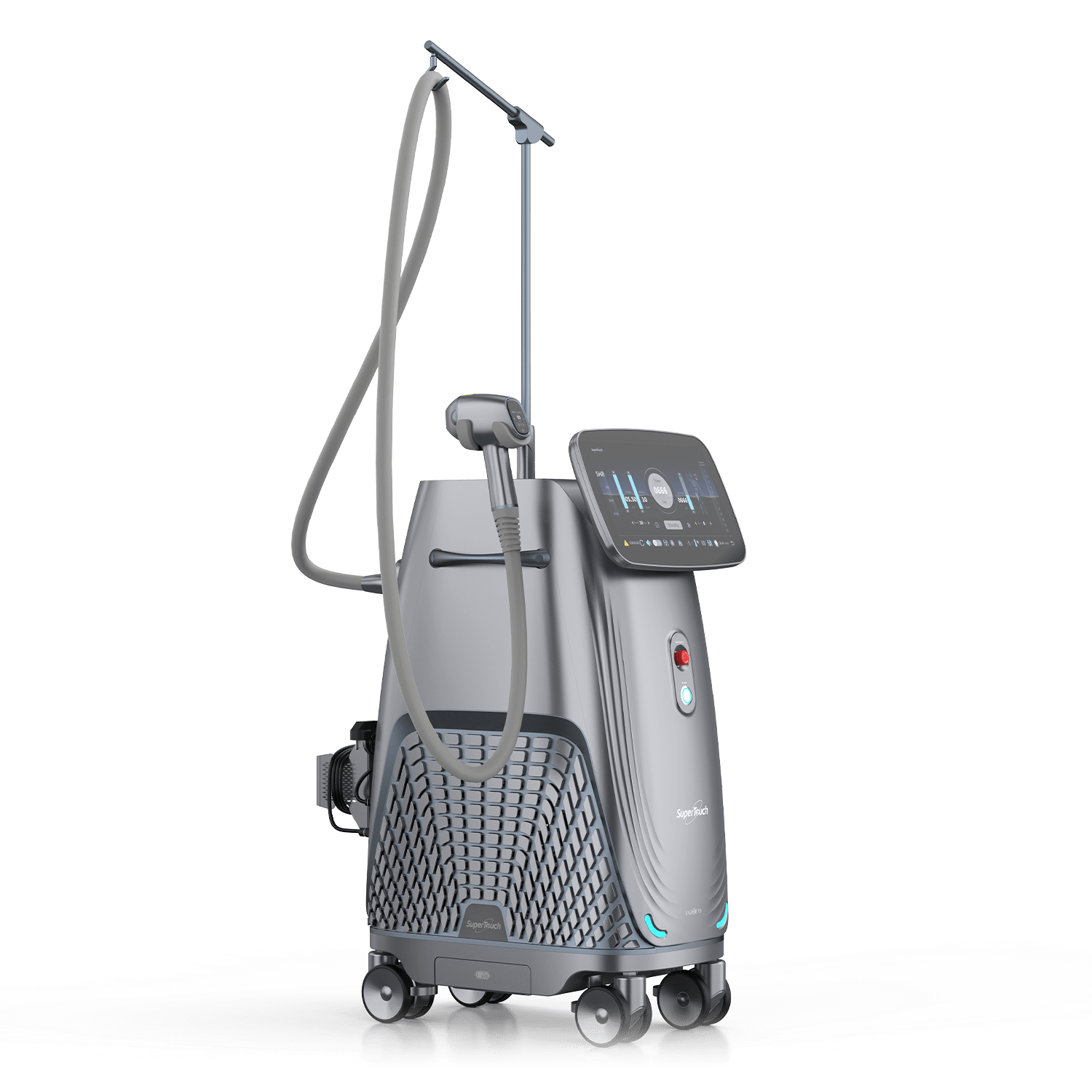
ENZOEYS’s SuperTouch S500 provides an example of a multi-wavelength configuration. Its published specifications list 755 nm, 808 nm, and 1064 nm light sources, alongside four interchangeable spot sizes: φ6 mm, 12 × 12 mm, 12 × 24 mm, and 12 × 36 mm. The model also provides separate hair-removal and skin-rejuvenation modes. (enzoeys.com)
Such a configuration gives practitioners several wavelength options within one device, although the appropriate setting still depends on individual assessment. The presence of 808 nm does not mean every patient should receive identical parameters, since hair characteristics, skin response, and treatment location remain relevant.
When 755nm Alexandrite May Be Considered
Alexandrite’s 755 nm wavelength has strong melanin absorption, which can make it particularly useful for dark, coarse hair when the patient’s skin characteristics allow its use. Its relatively high absorption can support efficient energy delivery to pigmented hair follicles under suitable clinical conditions.
Higher melanin levels in the epidermis require greater caution because the same optical property that makes hair a target can also increase interaction with the surrounding skin. Appropriate patient assessment and parameter selection are consequently essential rather than relying solely on wavelength.
Neither wavelength should be viewed as universally superior. Published dermatology guidance emphasizes that laser hair removal outcomes vary according to skin color, hair color and thickness, treatment area, and the specific laser used. (aad.org) Clinical suitability is more informative than comparing wavelength numbers alone.
Making A Practical Equipment Comparison
Procurement teams can begin by identifying the patient groups and treatment areas most frequently served by the clinic. A practice treating predominantly lighter skin with coarse dark hair may have different priorities from one serving a broader range of skin tones. Expected appointment volume, cooling design, spot sizes, controls, and operator training should also enter the discussion.
Equipment flexibility can become valuable when the clinic handles varied treatment requirements. The S500’s four spot sizes range from φ6 mm to 12 × 36 mm, allowing the device to accommodate both smaller treatment zones and broader body areas. Its specifications provide concrete parameters that buyers can compare against their clinical workflow rather than relying on general claims. (enzoeys.com)
The term diode laser hair removal machine describes an equipment category rather than one fixed treatment approach. Differences between individual models can involve wavelength combinations, spot dimensions, pulse frequency, cooling, interfaces, and operating modes. A careful comparison should examine those details alongside practitioner expertise and patient requirements.
Conclusion
Wavelength comparison becomes more useful once skin, hair, treatment area, and equipment configuration are considered together. The 755 nm Alexandrite wavelength offers strong melanin absorption and has an established role in hair reduction, while 808 nm diode equipment provides a different balance of absorption and penetration. Laser hair removal machine selection should reflect the clinic’s patient population and treatment workflow rather than rely on wavelength alone.
For professional buyers, documented specifications such as those offered by ENZOEYS provide a practical basis for comparing configurations, while clinical assessment remains central to determining appropriate treatment parameters. A diode laser hair removal machine with multiple wavelength and spot-size options can offer broader configuration choices, but those capabilities still need to be matched with qualified clinical practice.
