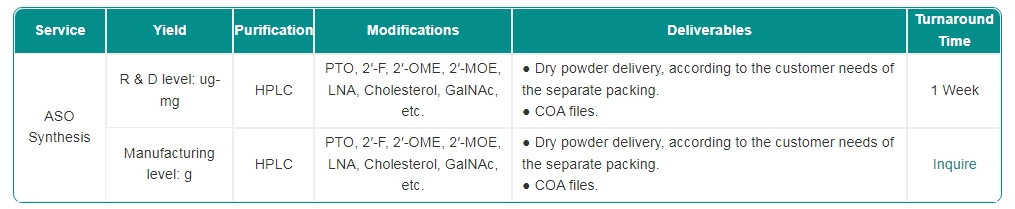
Synbio Technologies provides advanced solutions for researchers seeking reliable antisense oligonucleotides. Designing an effective antisense oligo requires careful consideration of multiple factors to ensure in vivo efficacy. One of the primary steps involves ASO Synthesis, which determines the quality and functionality of the oligonucleotide. They offer custom synthesis services with various chemical modifications to enhance stability and reduce degradation in biological systems. By prioritizing precision in the synthesis process, Synbio Technologies helps scientists achieve more consistent experimental outcomes.
Optimizing Sequence Design
A critical metric in antisense oligo design is the sequence itself. Efficient sequences must bind specifically to target RNA while avoiding unintended interactions. Through comprehensive Antisense oligo analysis, researchers can evaluate potential off-target effects and identify optimal regions for binding. They employ computational tools and experimental validations to predict binding efficiency and thermodynamic stability. Careful sequence selection not only improves target specificity but also enhances the likelihood of successful in vivo performance. Synbio Technologies supports this process with detailed analysis reports that guide researchers in making informed design decisions.
Chemical Modifications and Stability
Chemical modifications play an essential role in improving the performance of antisense oligos. Modifications can increase nuclease resistance, enhance cellular uptake, and extend the oligonucleotide’s half-life in biological systems. Through their tailored ASO Synthesis services, Synbio Technologies offers a range of modifications suited for different research objectives. Additionally, Antisense oligo analysis allows scientists to evaluate how modifications influence efficacy and safety, ensuring that the oligos remain functional under in vivo conditions. Incorporating these considerations early in the design phase reduces potential failures and streamlines downstream applications.
Delivery and Functional Evaluation
Successful antisense oligos require not only optimal sequence and stability but also efficient delivery to target tissues. Delivery strategies must account for cellular uptake, distribution, and potential immune responses. Synbio Technologies provides guidance on integrating delivery considerations with sequence design, leveraging their expertise in ASO Synthesis and Antisense oligo analysis to maximize in vivo effectiveness. Evaluating functional outcomes, including gene knockdown efficiency and phenotypic effects, completes the assessment of a well-designed antisense oligo.
Conclusion
In conclusion, achieving successful in vivo efficacy in antisense oligo research depends on multiple interrelated metrics: precise sequence design, effective chemical modifications, and efficient delivery strategies. Synbio Technologies offers comprehensive support through their ASO Synthesis and Antisense oligo analysis services, helping researchers design oligonucleotides that perform reliably in preclinical studies. By integrating quality synthesis, detailed analysis, and tailored modifications, they provide a complete solution for developing antisense oligos suitable for diverse experimental applications.
