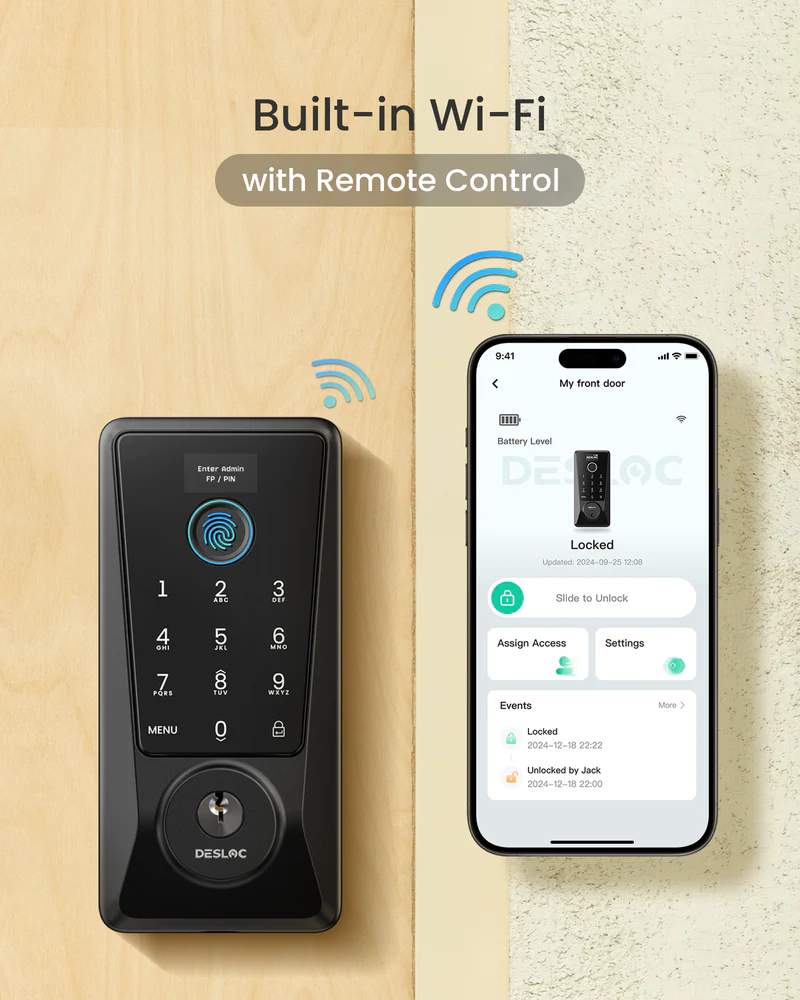
In an increasingly connected world, the demand for smart home technology has surged, particularly for security applications. Among these innovations, the smart WiFi door lock has emerged as a popular choice for homeowners seeking convenience and enhanced security. DESLOC, a prominent player in this market, offers products like the DESLOC D110 Plus smart WiFi door lock, which sets a benchmark for performance and reliability. This article delves into the energy needs of a WiFi enabled smart lock and what users can realistically expect in terms of power consumption and longevity.
Energy Consumption and Efficiency
The energy efficiency of a WiFi enabled smart lock is crucial for ensuring reliable performance without frequent battery replacements. Typically, these locks operate on battery power, with the DESLOC D110 Plus smart WiFi door lock specifically using four AA batteries(Sold separately). The average lifespan of these batteries can reach up to six months, dependent on usage patterns and the frequency of access.
The lock’s WiFi functionality is a key factor in its energy needs. Unlike traditional locks, which require no energy, a smart WiFi door lock uses a small amount of power to maintain a connection to a home network and communicate with smartphones or other devices. When the lock is in sleep mode, its energy consumption is minimal; however, significant power is drawn during activations, such as locking or unlocking the doors remotely.
To mitigate battery drainage, DESLOC incorporates a low-battery alert system, ensuring users are informed well before the batteries run out. Additionally, the lock features a USB Type-C emergency port that allows for immediate power access, providing peace of mind for users should the batteries deplete unexpectedly.
Practical Considerations for Users
When evaluating the energy needs of a smart WiFi door lock, potential users should consider several factors that can impact battery life. The frequency of locking and unlocking, WiFi signal strength at the installation point, and the general conditions of the environment can all play a role in energy consumption. Locks positioned in areas with poor WiFi reception may consume additional power as they attempt to maintain a connection, thereby reducing battery longevity.
Furthermore, users should strategically choose when to connect to WiFi. Continuous connectivity is not always necessary; many WiFi enabled smart locks allow for scheduled connections, enabling users to conserve battery life while still maintaining security. Understanding these aspects can help homeowners make informed decisions that maximize the effectiveness and lifespan of their smart locks.
Ensuring Longevity with Smart Choices
Energy needs are a vital aspect of maintaining a WiFi enabled smart lock effectively. By selecting a reputable brand like DESLOC, which provides reliable battery performance and emergency power options, homeowners can integrate advanced security solutions without excessive maintenance concerns. Awareness of energy consumption patterns and strategic device management will further enhance the longevity of these smart locks, ensuring both safety and convenience in daily use.
