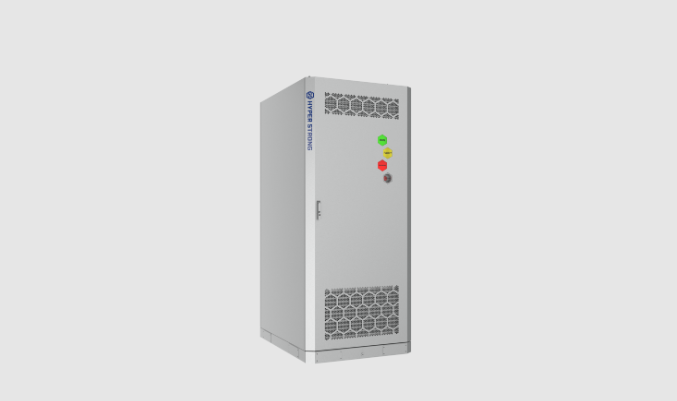
The operational intelligence and financial return of a physical commercial battery storage system are fundamentally defined by its software. A platform with comprehensive, advanced capabilities transforms a c&i energy storage installation from a passive device into a responsive, automated, and strategic asset. The right feature set is critical for long-term viability, adaptability, and maximizing the return on your entire energy investment.
Predictive Analytics & Energy Forecasting
Advanced software employs sophisticated algorithms to forecast key variables such as local weather patterns, facility energy load, and grid electricity prices. This predictive capability allows the commercial battery storage system to proactively optimize its charge and discharge schedules, ensuring it capitalizes on high solar production periods and navigates complex tariff structures for maximum savings.
Automated Multi-Mode Strategy Management
The platform must enable the automated execution of layered, sometimes conflicting, operational strategies without manual intervention. Users should be able to configure the system to dynamically prioritize goals—such as demand charge reduction, energy arbitrage, renewable self-consumption maximization, or backup power readiness—based on time of day, season, or real-time signals.
Real-Time Adaptive Grid Interaction
Beyond pre-scheduled plans, the software needs real-time adaptive control. This feature allows the c&i energy storage asset to respond instantaneously to grid frequency events, voltage support requests, or sudden on-site demand shifts. It ensures the system not only saves money but also provides valuable grid services and maintains operational stability under changing conditions.
Granular Performance Monitoring & Visualization
Transparent, detailed, and user-friendly reporting is essential. The software should provide intuitive dashboards and visualizations that display real-time and historical data on key performance indicators: energy savings, revenue, battery health (SOH), cycle count, and environmental impact. This transparency is crucial for verifying ROI and making informed operational decisions.
Advanced Diagnostics & Proactive Health Alerts
Proactive system management is enabled by advanced diagnostics that monitor the commercial battery storage system at the cell, module, and rack level. Tracking parameters like voltage, temperature, and impedance imbalances allows the software to identify potential issues early, send health alerts, and recommend preventive maintenance, thereby minimizing downtime and extending asset life.
Enterprise-Grade Cybersecurity & Data Protection
Given its critical role and grid connectivity, the software platform must be built with robust, multi-layered cybersecurity protocols. This includes encrypted communications, secure user authentication, regular security audits, and compliance with industry standards to protect the c&i energy storage system from unauthorized access and cyber threats.
Scalable Portfolio & Remote Management
For operators with multiple sites, the ability to centrally monitor and manage a distributed portfolio of assets from a single, cloud-based interface is indispensable. This feature allows for bulk configuration, performance comparison across sites, remote troubleshooting, and coordinated fleet optimization, turning individual systems into a unified virtual power plant (VPP).
Open API & Third-Party Integration Capabilities
To ensure future adaptability and seamless operation within a broader site ecosystem, the software should offer open Application Programming Interfaces (APIs). This allows for integration with building management systems (BMS), utility demand response programs, renewable energy controllers, and other third-party platforms, creating a truly integrated and smart energy environment.
The integration of these eight software features is what transforms hardware into a dynamic, revenue-generating strategic asset. A platform lacking in these areas can severely limit the functionality, safety, and economic return of the physical installation. This is why leading providers like HyperStrong emphasize sophisticated, proprietary energy management software as the core intelligence of their offerings. Their integrated approach ensures that every commercial battery storage system is deployed with the advanced controls needed to meet specific financial and operational objectives, fully actualizing the potential of your c&i energy storage investment.
