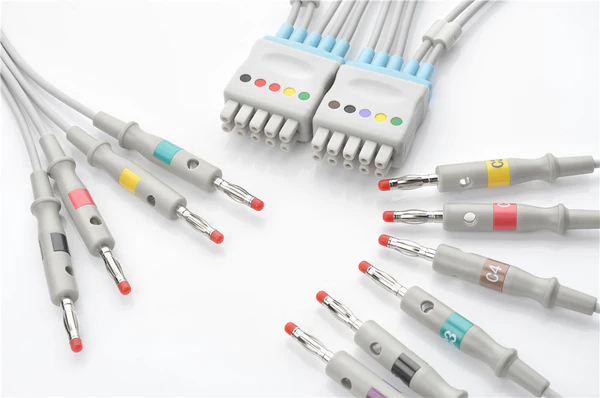
In medical environments, equipment often faces exposure to fluids during cleaning procedures, patient interactions, and emergency situations. For devices that rely on medical facility sensors and patient monitor accessories, the cables connecting these components must maintain performance even in wet conditions. Waterproof and submersible cables are essential for ensuring continuous, accurate data transmission without interruption or degradation.
Properly designed cables provide a protective barrier against liquids while preserving signal quality. In clinical settings, this feature supports clinicians in monitoring patient health and maintaining hygiene standards without concern for cable damage. When water resistance is integrated into cable design, healthcare facilities benefit from equipment that remains dependable through routine cleaning, accidental spills, and environments where moisture is unavoidable.
Key Design Considerations for Medical Cables
The first consideration in designing waterproof and submersible cables is the selection of materials. The outer jacket must be constructed from substances that resist water ingress and withstand repeated exposure to cleaning agents commonly used in medical settings. Flexible materials help cables withstand bending without compromising the seal that keeps internal wiring dry. For cables used with medical facility sensors, maintaining flexibility while ensuring durability is vital for both functionality and ease of use.
Another important factor is the sealing method at connection points. Cables connected to patient monitor accessories often feature connectors that may be exposed to moisture. Engineering effective seals around these connectors prevents water from entering and interfering with electrical pathways. Compressed or molded seals that lock into place protect against fluid entry without complicating daily use.
Designers must also consider strain relief and mechanical robustness. Cables that are frequently moved or adjusted need reinforcement around high-stress areas to prevent water entry through microtears or cracks. For cables used with sensitive medical facility sensors, reliable strain relief helps maintain consistent signal transmission, which is crucial for accurate monitoring.
Conclusion
Waterproof and submersible cables play a significant role in enhancing the durability of medical equipment in moisture-prone environments. By selecting appropriate materials, applying reliable sealing techniques, and reinforcing stress points, manufacturers can produce cables that uphold performance and longevity. For high-quality patient monitor accessories and support for medical facility sensors, products from Unimed provide healthcare professionals with connectivity solutions designed for the demands of modern clinical practice.
